


Introduction Translator VOD

Translator VOD

The NBCUX Lab is a small but growing group UX nerds led by director Mina Azimov. We’ve worked on projects ranging from content management systems for news to consumer-facing film promotional sites. Our passion lies in designing meaningful, immersive user experiences and we have a great time doing it! We have been approached by one of our technology groups to help with research and design of a new Translator application for Video on Demand.

The VOD Era

Video on Demand, or VOD, is a service that enables users to view video content anytime from a wide range of digital libraries. Unlike broadcast TV, VOD gives users the power to control the temporal order to view content. That feature has caused VOD popularity to skyrocket in the past decade. VOD services have maintained the annual growth rate of 11.65% from $41920 million in 2015 to $58350 million in 2018. By 2023 the VOD market size is estimated to be $91620 million!

To keep up with the fast moving media environment companies have had to rethink the ways they deliver content. NBCUniversal now delivers a lot of content to on demand set top boxes of cable providers like DISH and online video distributors (OVDs) like Hulu. By 2020 we plan on launching our own internal streaming service, “TV Everywhere”. To manage the growing demand high quality VOD content, we are creating an internal management system, Translator VOD. NBCU is also building an internal servicing pipeline in the cloud called AWS.

The Problem

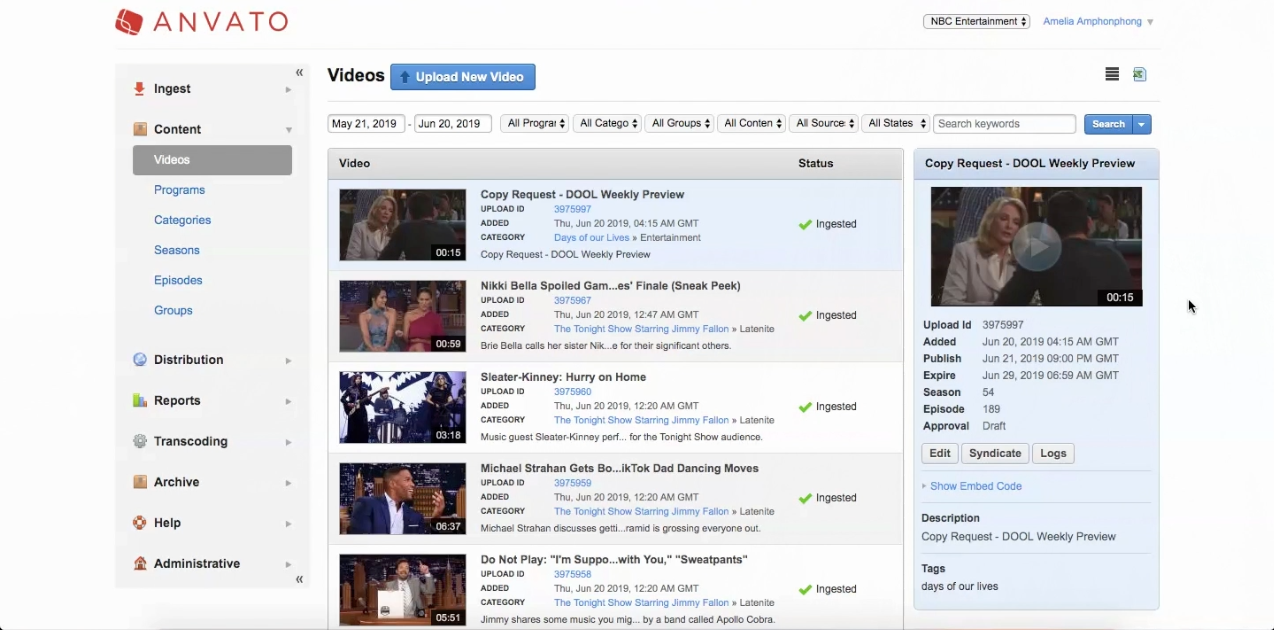
Currently NBCU uses a Google service called Anvato MCP as a VOD management system. Although MCP gets the job done, users have complained there are a lot of problems with it such as limited filters, no saved searches, and no bulk season editing. It is also an external service which limits NBCU control over the process.

To streamline the workflow and fix all the pain points in MCP, we are creating our own VOD hub within the Translator Ecosystem.

Users

Business Group

The Business Group, or Digital Distribution Operations team (DDOps), trafficks content in a bi-monthly basis for VOD. They will create the work orders in Translator VOD.

Brands

The digital team within each individual network. They will go into Translator VOD to enter metadata of their content (episode and series level).

GCOs

The Global Client Operations team who manages work orders and gets video files ready for VOD from OTTO to Translator VOD for syndication. They makes sure work orders get completed properly and on time.

Current Workflow

1

Content Distribution creates a “Traffic Report” with list of VOD videos needed for upcoming week.

2

Individual GCO teams download the Traffic Report and cater it so the list is only their assigned network. They then upload the revised spreadsheet to OTTO.

3

OTTO ingest the Traffic Report and creates specific asset renditions for each row. OTTO then sends the orders to Mediator.

4

GCO users match the records in MCP to the OTTO orders.

5

VOD metadata gets approved.

6

Both OTTO and Mediator transcode the videos in the orders.

7

Clients receive VOD content.